
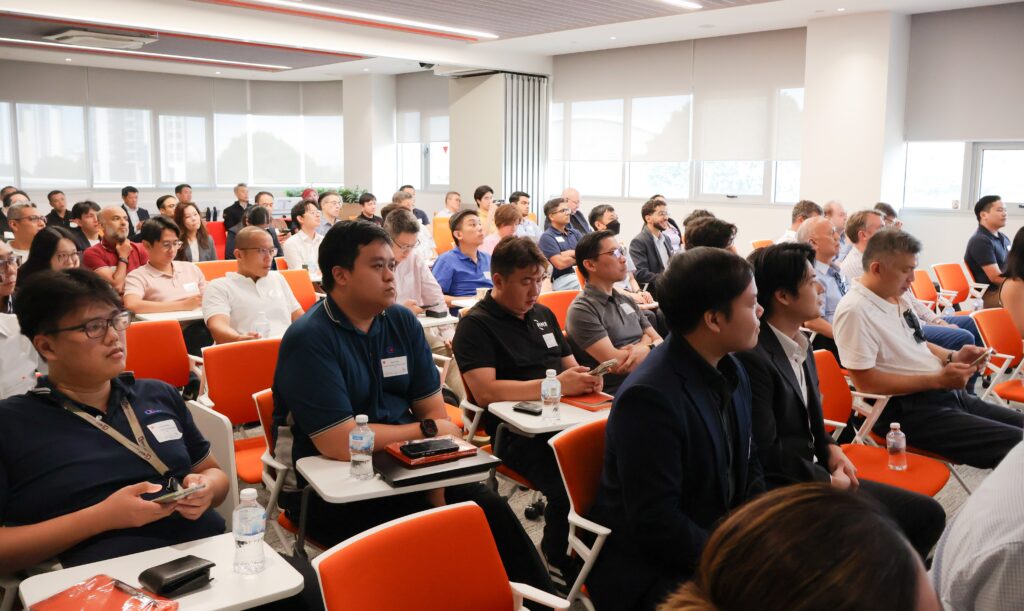
What does Smart MRO actually look like on the ground for aerospace organisations? That was the focus of AAIS’ Smart MRO seminar held on 8 September, which brought together representatives from aerospace companies, technology providers and industry practitioners to explore how digital technologies can address real operational needs.
Held at Mitutoyo Asia Pacific, the seminar featured the presentation of a Smart MRO roadmap by Deloitte, real-world applications in inspection and automation, an industry panel, live technology demonstrations, as well as industry networking.
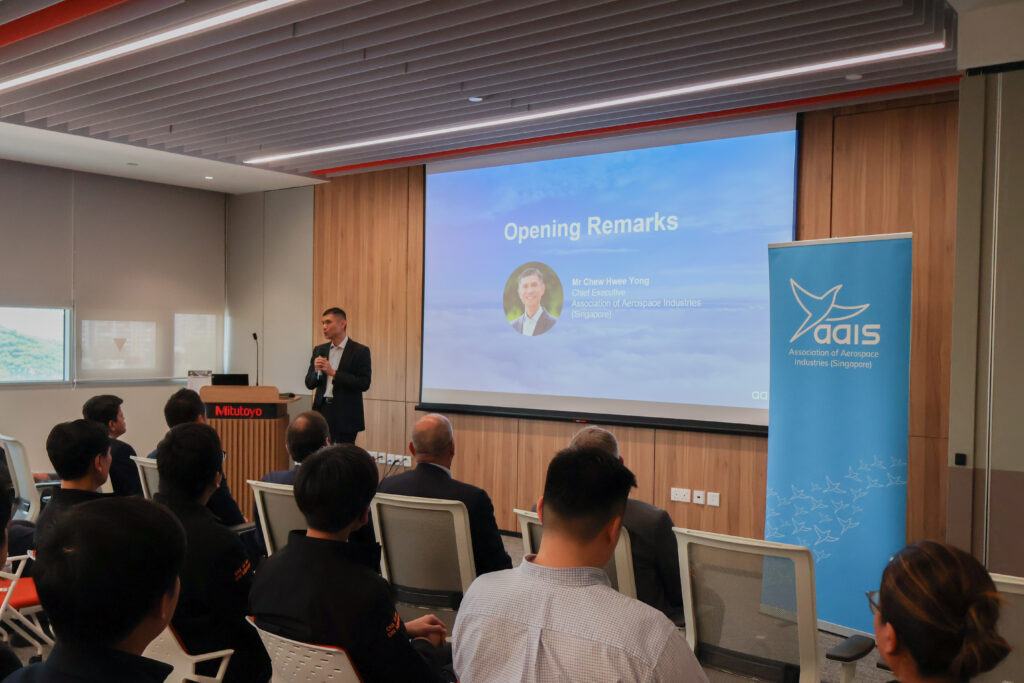
AAIS Chief Executive Mr Chew Hwee Yong opened the seminar by highlighting AAIS’ role in supporting members through digitalisation and operational transformations through technology, including capability development, training and workforce initiatives. Mitutoyo Asia Pacific Managing Director Mr Takeshi Matsuike also welcomed participants, encouraging them to work closely with solution providers to address challenges and deliver a competitive edge.
From roadmap to real-world applications
Mr Chris de Lavigne, Executive Director and Sector Lead for Aerospace & Defense Southeast Asia, Deloitte, set the context for further discussions, sharing a Smart MRO roadmap developed by Deloitte. The framework focuses on identifying operational pain points where digital technologies can deliver measurable value. It outlined a Smart MRO vision as a predictive, synchronised ecosystem that integrates advanced technologies, a human-centred workforce and coordinated planning across facilities, supported by cybersecure infrastructure.
Mr Andrew Fifield, CMM Product Manager, Mitutoyo UK, brought this to the shop floor through UK customer case studies, covering advanced CMM capabilities, five-axis continuous scanning, Model-Based Definition and the use of a digital thread to connect product definition and inspection data.
Mr Vivekanand Patil, Senior Regional Manager, Robotics, Epson Singapore, demonstrated how robotic cells can be integrated with CMMs for automated part handling and inspection, highlighting how automation approaches from high-volume manufacturing can be adapted to MRO environments.
Photos: Mitutoyo Asia Pacific
Making Smart MRO work on the ground
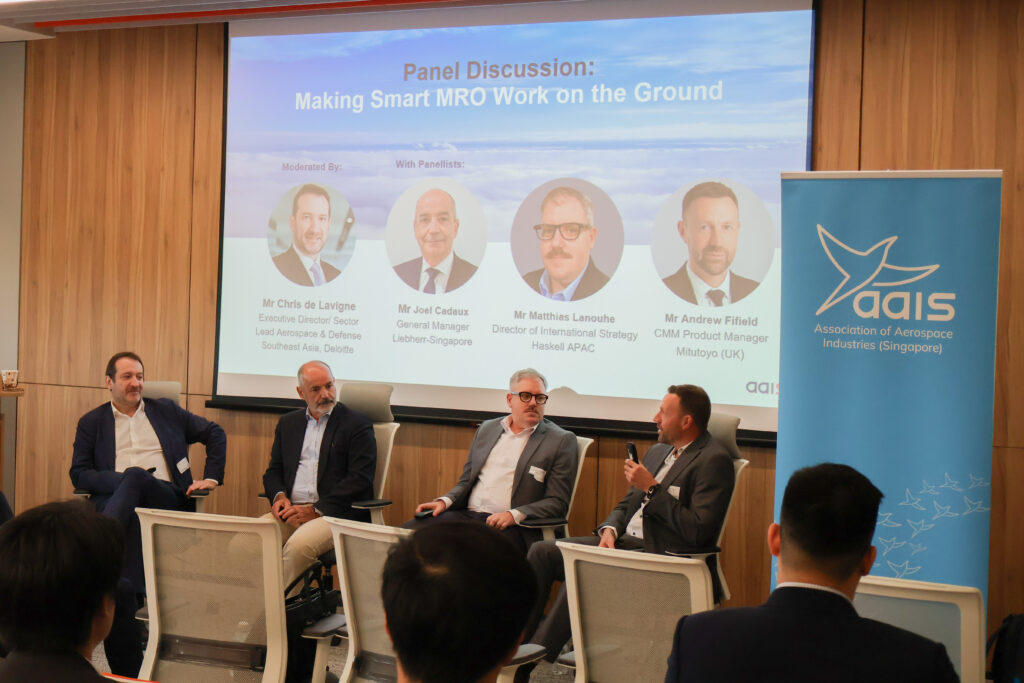
The next segment featured a panel discussion featuring Mr Joel Cadaux, General Manager of Liebherr-Singapore; Mr Matthias Lanouhe, Director of International Strategy at Haskell APAC; and Mr Fifield. Moderated by Mr de Lavigne, the discussion explored the practical considerations of implementing Smart MRO, with key insights including:
- From air to ground: Mr Cadaux highlighted how Smart MRO starts in the air, with predictive maintenance translating aircraft data into actionable insights. On the ground, these support applications such as AI-driven dynamic shop scheduling and improved customer quotation acceptance ratios.
- Design around operational needs: Mr Lanouhe emphasised the importance of first identifying the problem to be solved, then designing the appropriate technology solutions, workflows and physical space to address it efficiently. This is particularly relevant as many regional MRO facilities require refurbishment to accommodate smart technologies and support connectivity across the globally interconnected aviation supply chain.
- Focus on efficiency and business value: With efficiency and on-time delivery driving market demand, digitalisation must address clear operational needs rather than pursue technology for its own sake. Drawing on his experience with UK aerospace companies, Mr Fifield highlighted the importance of identifying the problem before selecting the technology. High capital expenditure also remains a barrier to automation in the region, making a clear business case and measurable returns essential to maintaining competitiveness.
- Bring people along: Transitioning from traditional workflows to digital processes requires workforce engagement, upskilling and effective change management. In a highly certified industry such as aerospace, implementation must also be carefully managed to maintain safety, quality and regulatory compliance.
Seeing Smart MRO in action
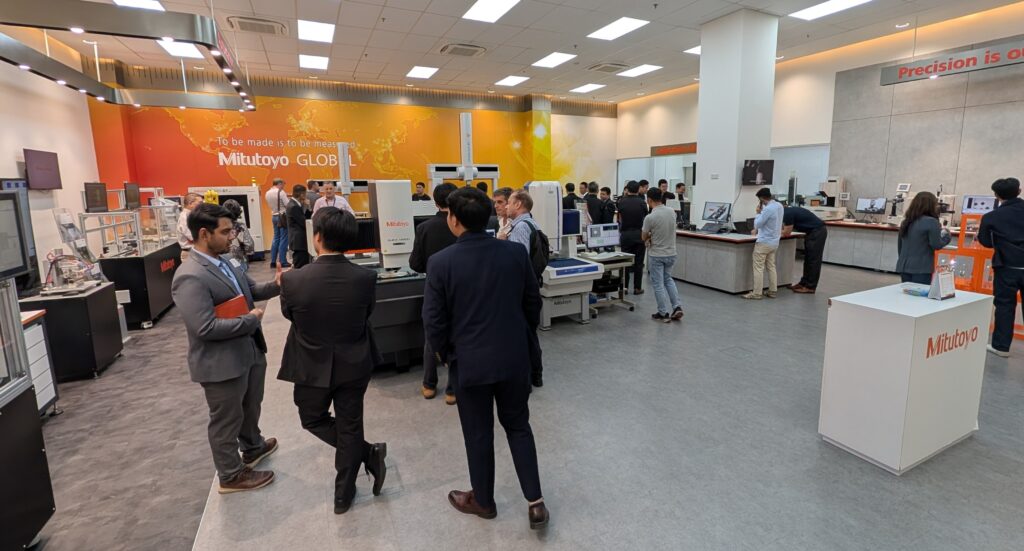
The discussion continued at Mitutoyo’s M3 Showroom, where participants took part in a guided tour and live technology demonstrations. The showroom was lively with questions and conversations as attendees explored precision measurement, automated inspection and other technologies, and discussed how these could be applied to their own MRO and manufacturing operations.
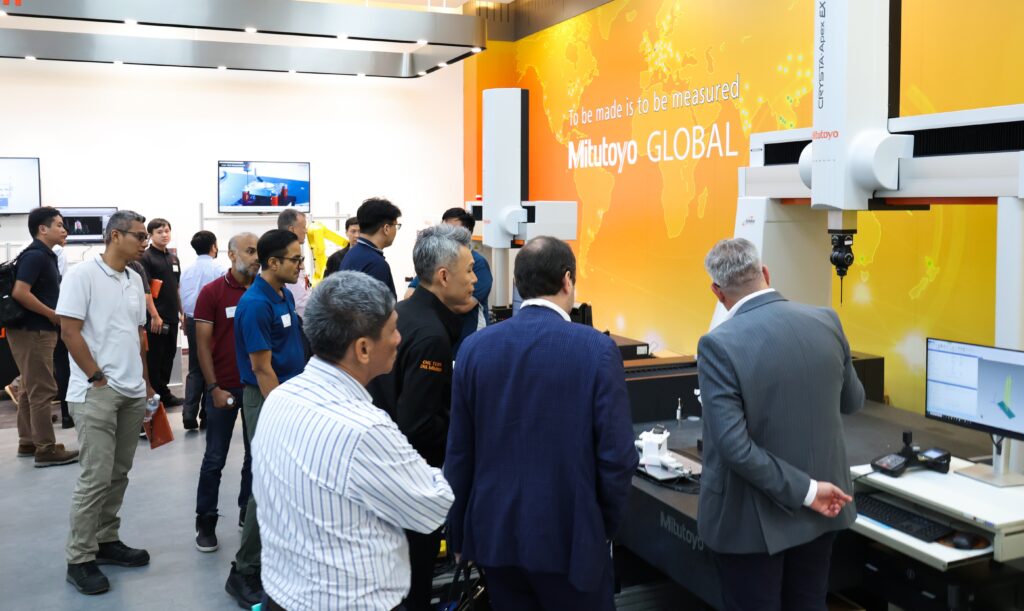
Participants were then invited to continue the conversation at a networking reception over beer and light bites.
AAIS thanks Mitutoyo Asia Pacific, Deloitte, Epson Singapore, Liebherr-Singapore, Haskell APAC and all speakers and participants for contributing their expertise and making the seminar an engaging and practical discussion.
Recent Comments