
In conjunction with the International Aerospace Quality Group (IAQG) Asia Pacific 2026 Fall Sector Meeting held in Singapore from 8 to 10 September 2026, AAIS and IAQG co-organised activities for Singapore’s aerospace quality community, bringing together industry practitioners to exchange insights on evolving standards and regulatory requirements.
Updates on Standards and Regulatory Requirements
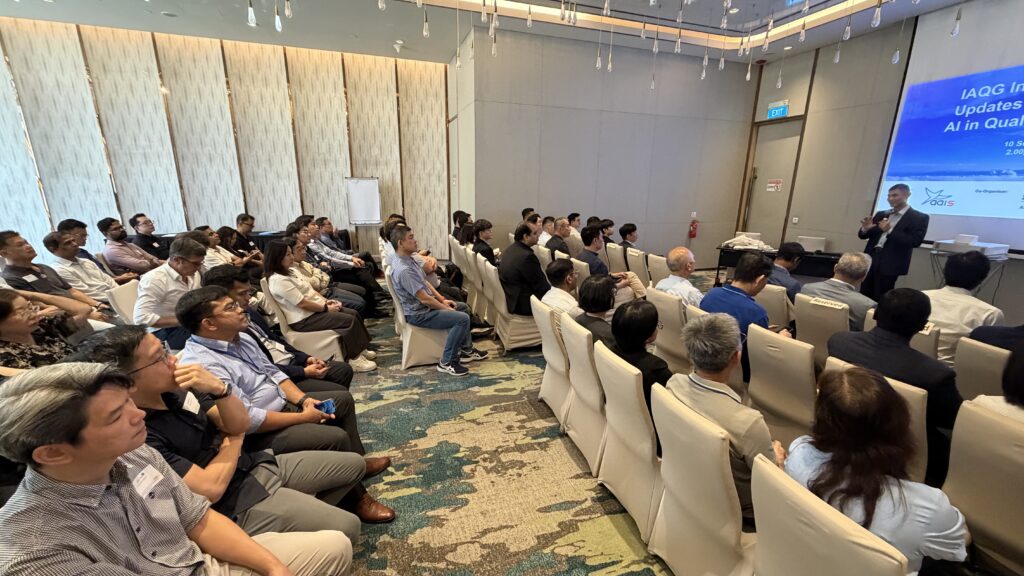
On 10 September 2026, AAIS and the IAQG held an industry seminar on “Updates on IA 91XX and AI in Quality Management”, bringing together industry practitioners. The session covered the latest developments in aerospace quality standards, upcoming regulatory requirements, and practical considerations for quality and safety management in the context of the growing use of artificial intelligence (AI).
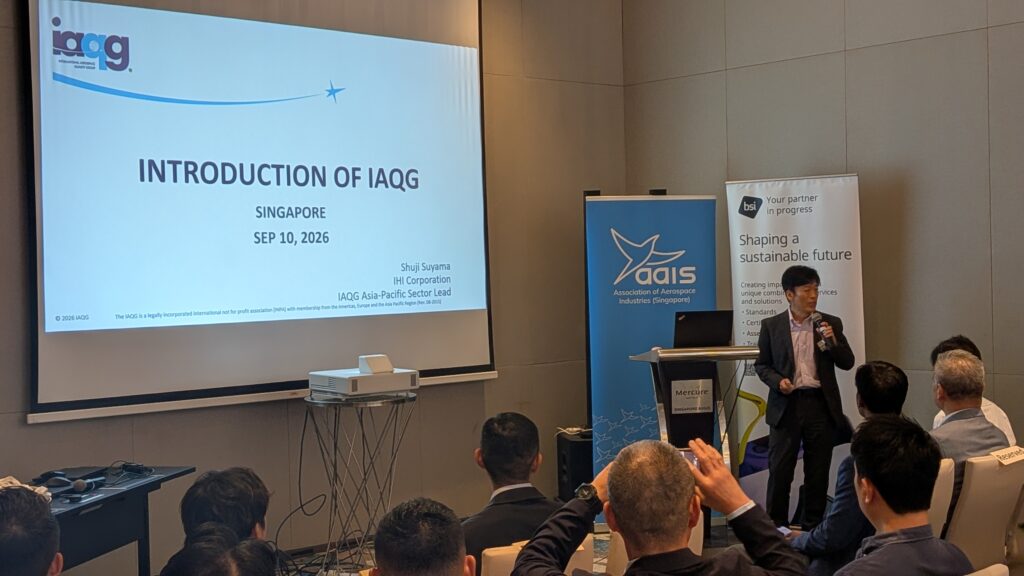
The seminar opened with an overview of the IAQG’s harmonised standards ecosystem, which is built around AS/EN/JISQ 9100 and 9110 and supported by tools such as the Supply Chain Management Handbook, Aerospace Improvement Maturity Model (AIMM) and OASIS supplier database. Shunji Suyama, IAQG Asia Pacific Sector Leader, highlighted plans to introduce AI-enabled analytics into OASIS to strengthen supplier oversight.
Jun Nishiguchi, Quality Manager at Mitsubishi Heavy Industries, provided an update on the revision of IA 9100. The revision is being developed alongside the forthcoming update to ISO 9001 and is expected to be published in early 2027. Key areas of change include stronger emphasis on leadership commitment to an ethical culture, clearer separation between risk and opportunity management, and greater focus on on-time delivery as a measure of customer satisfaction.
David Tan, Discipline Chief – QMS & Regulations at Pratt & Whitney, then covered the parallel revision of IA 9110 for Maintenance, Repair and Overhaul (MRO) organisations. Alongside the common changes to IA 9100, the proposed MRO-specific requirements include consideration of climate-related risks, controls for the use of AI, information security requirements aligned with EASA Part-IS, governance of work transfers between sites, confidential reporting channels for product safety concerns, and more refined controls for sub-tier suppliers and new-capability evaluation.
The briefing also covered the US Federal Aviation Administration’s (FAA) extension of drug and alcohol testing requirements under 14 CFR Part 120 to foreign repair stations servicing US Part 121 carriers. With compliance required by December 2027, affected repair stations in the Asia-Pacific region, including Singapore, will need to prepare for the new requirements. The session covered the testing procedures set out in Part 40, as well as two possible waiver routes: one for conflicts with local law and another based on education, training and disciplinary actions. Participants were encouraged to engage their national civil aviation authorities early.
AI and the Future of Quality and Safety Management
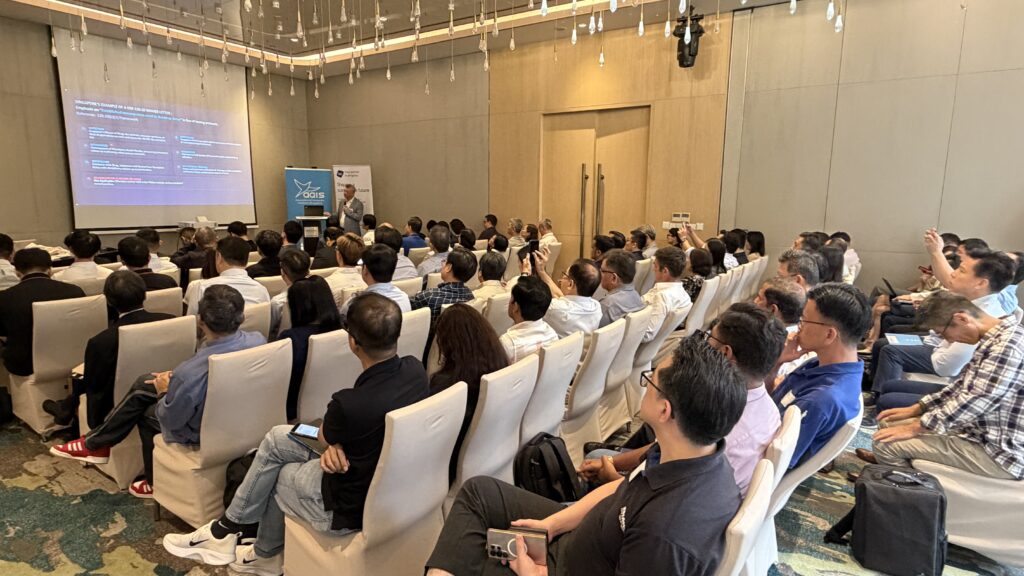
The second half of the programme turned to the practical application and governance of AI in aerospace quality and inspection, highlighting both its potential and the importance of maintaining human accountability.
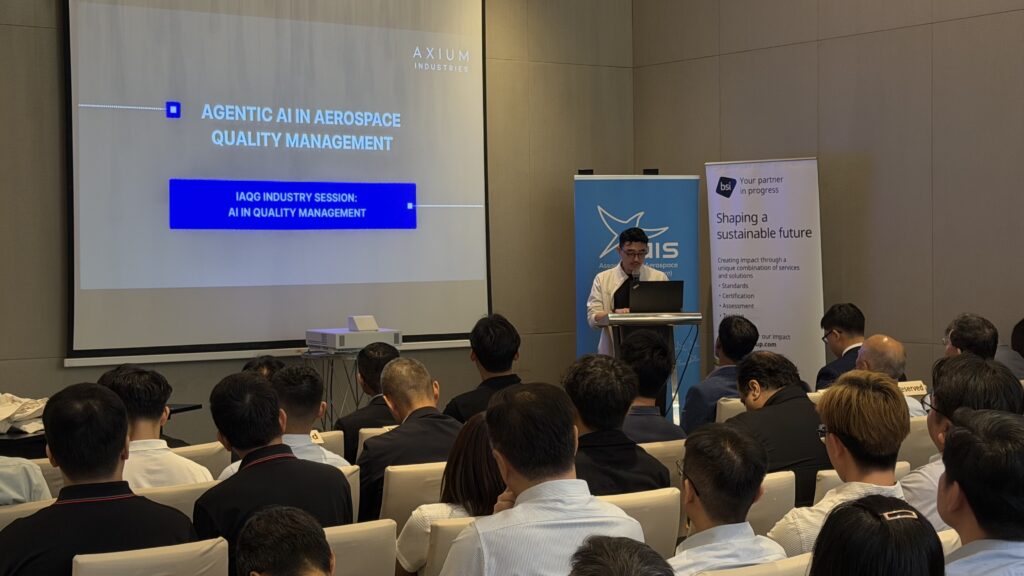
Jeremy Ang, CEO and Co-Founder of Axium Industries, brought participants through private, tailored AI systems that can be integrated into existing platforms. He highlighted the importance of strong data engineering and demonstrated applications such as matching airworthiness directives with parts inventories and identifying procurement duplication. It was noted that while AI can support these activities at scale, human review and intervention remain essential before actions are taken.
Sriram Parasuram, Vice Chairperson of the Singapore National Aerospace NDT Board, examined the application of AI in digital radiography for non-destructive testing (NDT). A key point was that while AI can support image enhancement and interpretation, image acquisition and final evaluation remain the responsibility of qualified personnel. He highlighted the need for rigorous qualification, including training AI systems using samples containing known defects, testing against previously unseen data, and monitoring performance when equipment or processes change.
The session concluded with Zack Khoo, Business Development Manager at BSI Group Singapore, who presented on ISO/IEC 42001, an international standard developed for AI management systems. This standard provides organisations with a structured and scale-neutral approach to governing AI. He noted that established quality standards such as ISO 9001 were not developed with AI-specific risks such as bias, hallucination and model drift in mind. ISO/IEC 42001 therefore provides an additional framework for organisations looking to establish appropriate AI governance.
Key Takeaway
The discussions highlighted several considerations for aerospace quality and compliance teams:
- Aerospace quality standards are increasingly aligned around common priorities. The forthcoming revisions to IA 9100 and IA 9110 address shared themes including ethical culture, delivery performance, information security and the responsible use of AI, alongside requirements specific to different parts of the aerospace sector.
- Quality and compliance teams should begin preparing early for upcoming requirements. Repair stations servicing US Part 121 carriers will need to meet the extended drug and alcohol testing requirements by December 2027. Early engagement with national civil aviation authorities can help organisations understand the applicable requirements and prepare for implementation.
- AI should augment, not remove, human oversight. AI can support quality and inspection activities at scale, but human intervention and checks remain important, particularly where decisions may affect product safety, airworthiness or compliance. Effective implementation therefore requires reliable data, appropriate training and validation, clear accountability and continuous monitoring.
- As AI becomes more widely integrated into aerospace operations and quality processes, appropriate standards, governance and regulatory requirements will be important to ensure that its use is safe, accountable and fit for purpose. With AI-related requirements emerging in IA 9100 and IA 9110, alongside ISO/IEC 42001, organisations should integrate responsible AI governance into existing quality, safety and compliance processes.
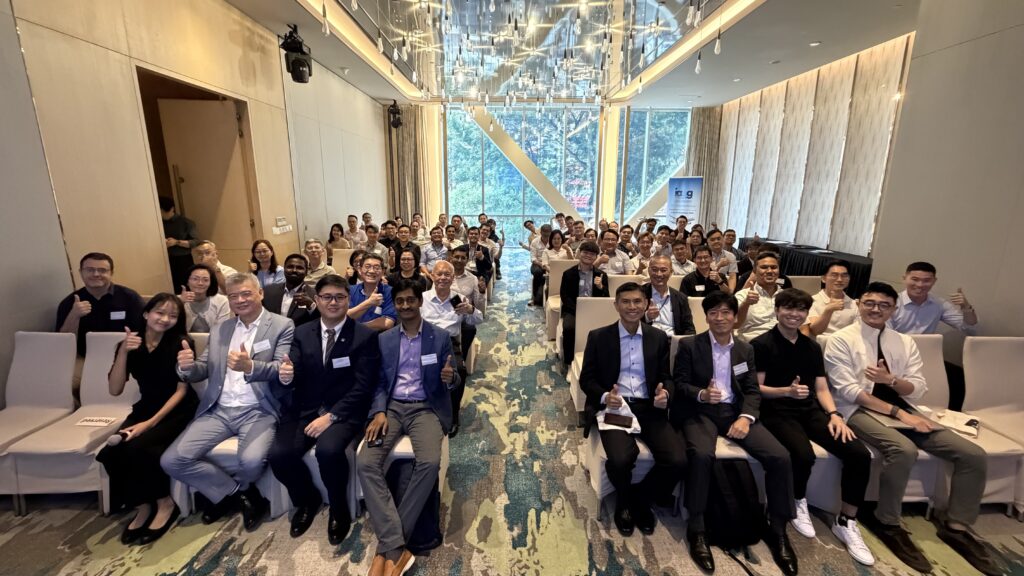
Connecting the Quality Community
The programme also included an IAQG Asia Pacific Networking Evening on 9 September 2026, where AAIS members had the opportunity to connect with quality professionals from across the Asia Pacific region and exchange experiences and insights.
Together, the activities provided a useful platform for the local aerospace quality community to stay abreast of changes in standards and regulations while discussing how new technologies such as AI are being applied in practice.
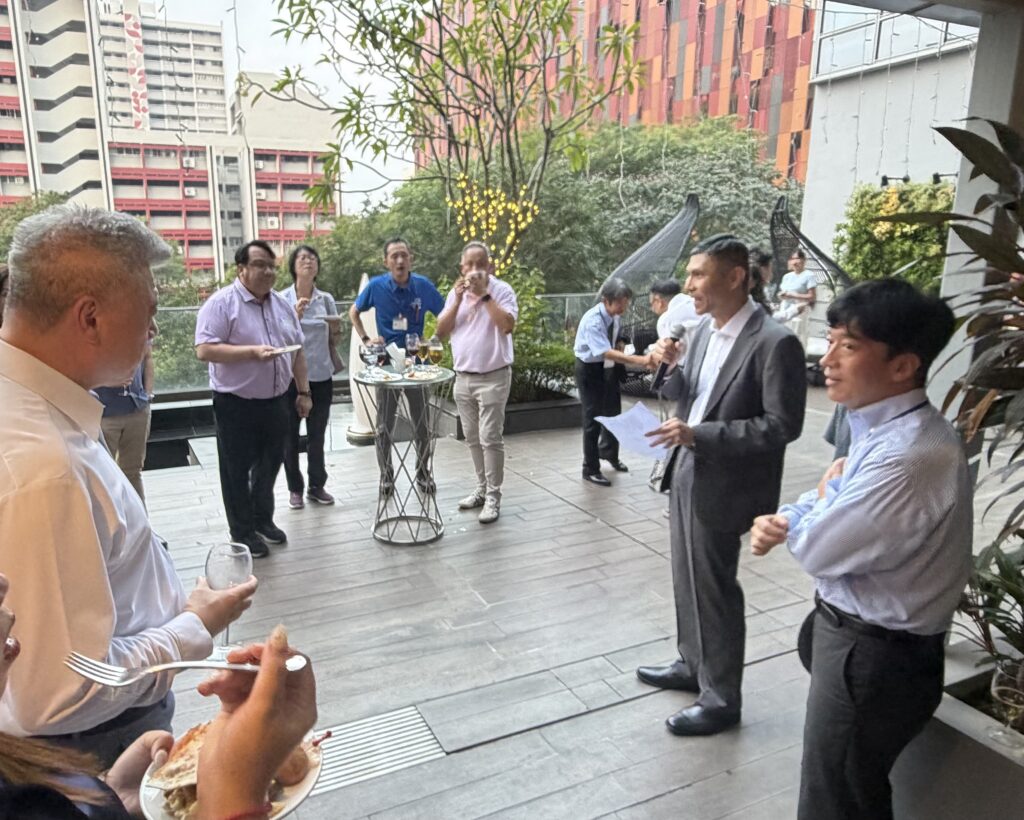
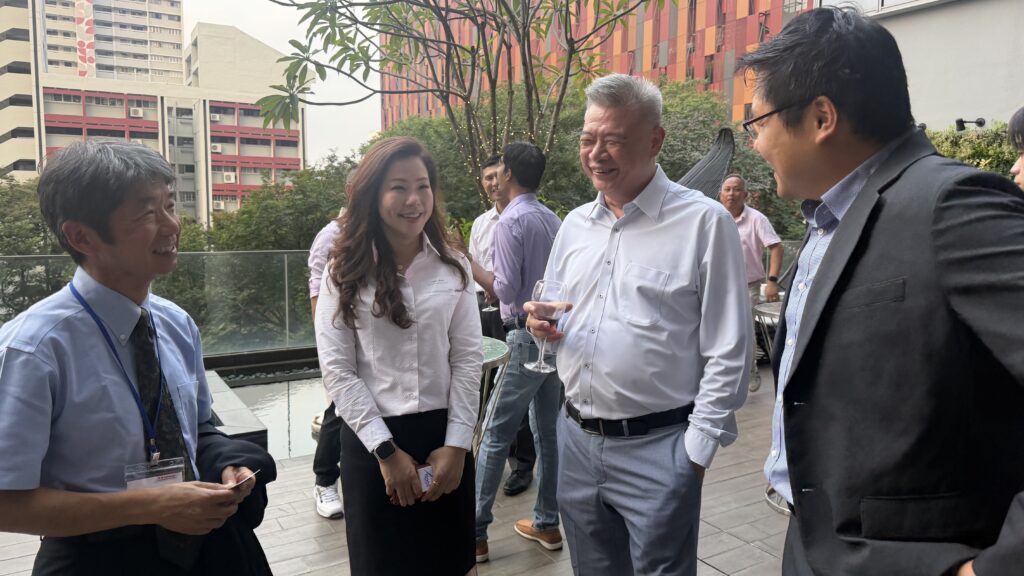
AAIS thanks all speakers for sharing their expertise and participants for their active engagement throughout the programme. We also extend our appreciation to BSI Group Singapore for sponsoring the IAQG Industry Update Session.
As aerospace standards, regulatory requirements and technologies continue to evolve, AAIS remains committed to supporting the aerospace quality community through knowledge-sharing and industry engagement.
Recent Comments