
Satellite technology is creating opportunities well beyond connectivity, with applications spanning aviation, maritime operations, geospatial intelligence, environmental monitoring and more. Turning these capabilities into practical solutions and sustainable businesses, however, calls for more than technological progress. It also requires customers, industry partnerships, access to markets and a supportive ecosystem.
These were among the themes explored at Unlocking Business Innovation through Satellite Technology & Applications, a seminar jointly organised by the Association of Aerospace Industries (Singapore) (AAIS), the French Aerospace Industries Association (GIFAS) and the French Chamber of Commerce in Singapore (FCCS) on 11 November 2026. Bringing together industry representatives from our combined membership, the full-house seminar provided a platform to exchange perspectives on emerging applications, commercial opportunities and the development of the wider space sector.
Building Singapore’s Space Capabilities
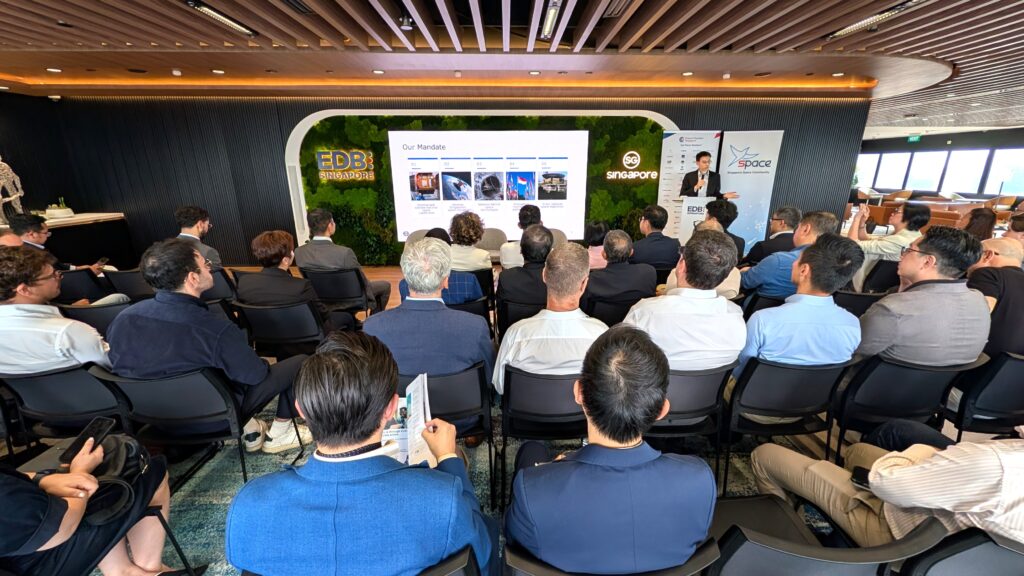
Following welcome remarks by representatives from AAIS, FCCS and GIFAS, the seminar opened with a keynote address by Mr Jonathan Hung, Deputy Chief Executive of the National Space Agency of Singapore (NSAS), who shared an overview of the agency’s mandate, Singapore’s position in the global space industry, and the capabilities and research activities supporting the sector’s development.
Mr Hung outlined NSAS’ work in satellite and space situational awareness, the development of a multi-agency operations centre to support government agencies in their geospatial requirements, and the Earth Observation Hub, which will focus on applications in water and climate resilience, disaster response, maritime operations, and carbon monitoring and sustainability.
Research and innovation will remain central to building Singapore’s space capabilities. Mr Hung shared that S$210 million had been committed under the Space Technology Development Programme, supporting research in areas including Quantum Key Distribution (QKD), Synthetic Aperture Radar (SAR), forest biomass estimation and space-based seed mutagenesis. He also alluded to a further tranche of funding to support continued development in the sector.
Beyond technology development, he touched on the importance of a broader policy and regulatory environment as the industry matures, including the development of space legislation. International partnerships will also be important, with Singapore building connections across Europe, the Middle East and Asia.
Looking ahead, Mr Hung encouraged greater industry participation in Space Summit 2027, which will bring together stakeholders to exchange ideas and strengthen connections across the international space community.
Putting Satellites to Work: Applications and Commercial Opportunities
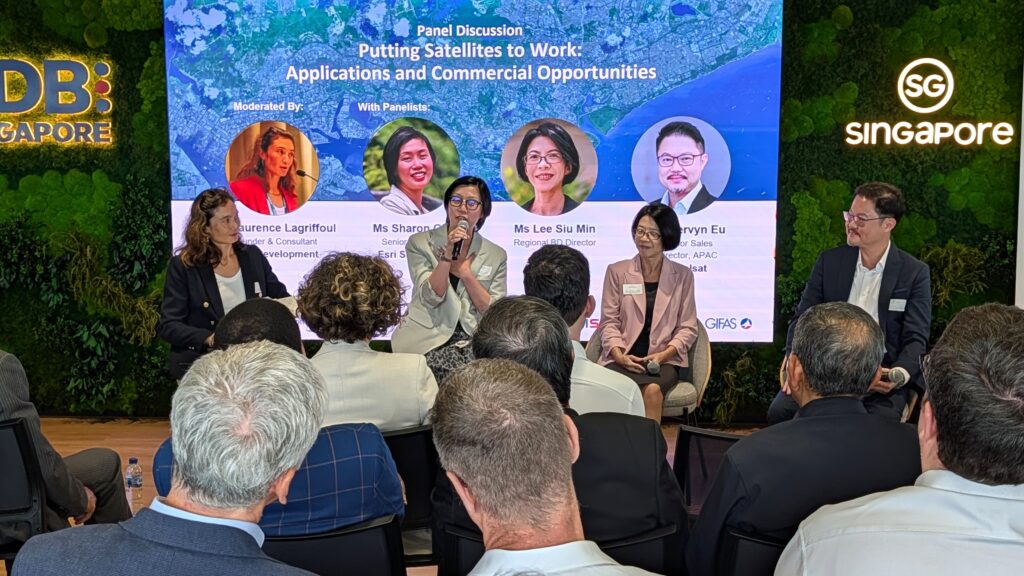
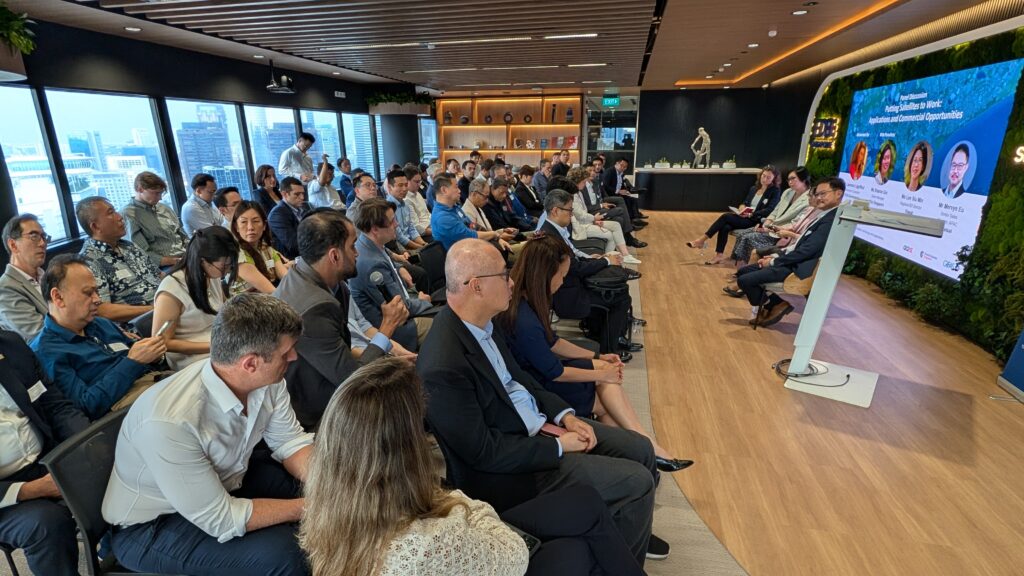
The first panel discussion examined how advances in satellite technology are creating new possibilities across established and emerging sectors, and what it takes to translate these capabilities into solutions that businesses can use.
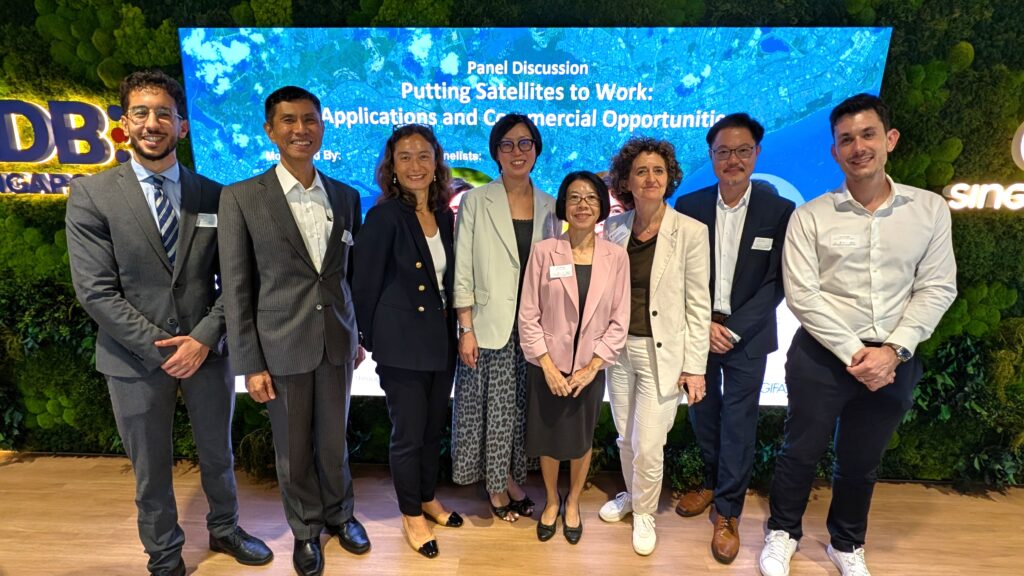
Moderated by Laurence Lagriffoul, Founder and Consultant at EOS Development, the panel featured:
- Siu Min Lee, Regional Business Development Director at Viasat
- Sharon Gin, Head of Solutions Engineering at Esri Singapore; and
- Mervyn Eu, Senior Sales Director, APAC at Eutelsat Asia.
One key theme was the growing demand for multi-orbit and multi-connectivity solutions. Rather than relying on a single satellite service, businesses are increasingly looking at combinations of Geostationary (GEO), Medium Earth Orbit (MEO) and Low Earth Orbit (LEO) capabilities to meet different operational requirements. While GEO satellites continue to provide broad coverage, MEO and LEO services offer higher speeds and lower latency for applications requiring more responsive connectivity. Together, these solutions can provide the reliability and service levels needed for increasingly connected operations.
The maritime and aviation sectors offer clear examples of this shift. In maritime operations, satellite connectivity is enabling connected vessels, remote monitoring and real-time data exchange, including applications that support more sophisticated vessel and offshore operations. In aviation, satellite-enabled data and connectivity can support more dynamic flight planning, weather disruption management and route optimisation, helping airlines improve fuel efficiency, punctuality and emissions performance.
The discussion also explored the growing accessibility of satellite imagery and geospatial intelligence. Businesses and government agencies can increasingly access satellite imagery and analytical tools on demand, without having to own satellite assets or invest in extensive data-processing infrastructure. Advances in multispectral and hyperspectral imagery, together with automated change detection, are supporting applications such as climate monitoring, coastline surveillance, disaster preparedness and agricultural management.
Other areas of demand include satellite backhaul for telecommunications networks in remote and underserved locations, as well as secure and resilient communications for government and defence applications. The panellists also pointed to the emerging low-altitude economy, where drones, inspections and electric vertical take-off and landing (eVTOL) aircraft will require reliable connectivity across different operating environments.
While the technology is advancing, wider adoption will depend on addressing practical considerations such as infrastructure costs, regulatory requirements across markets and the readiness of traditional operators to adopt new operating models. The discussion highlighted that commercial opportunities are not created by technology alone: understanding end-user needs and developing solutions that address them are equally important.
Growing Space Ventures: Connecting Capabilities to Partners and Markets
The second panel shifted the focus from applications to the development of space businesses, considering how companies can build the partnerships, customer relationships and commercial foundations needed to grow.
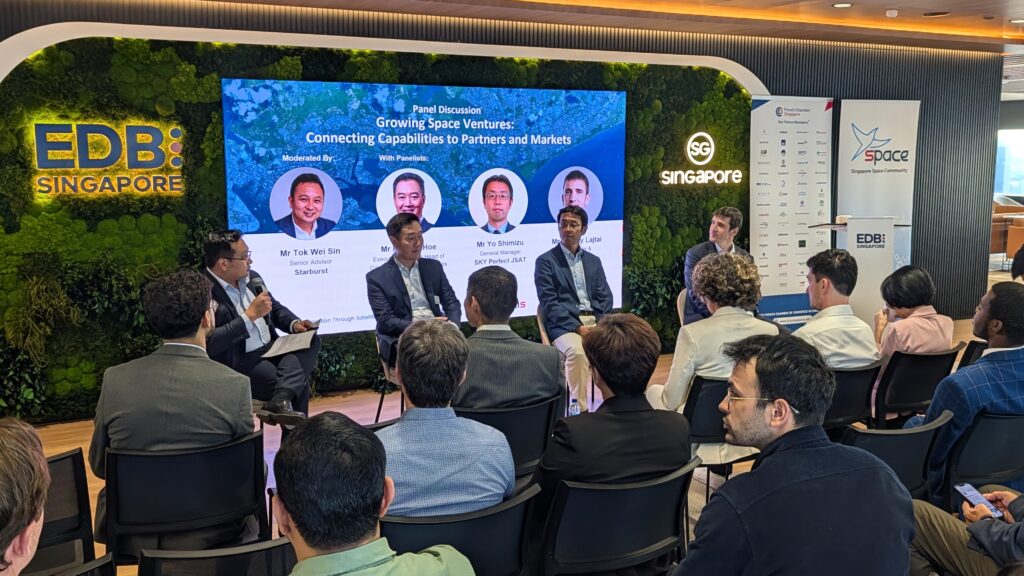
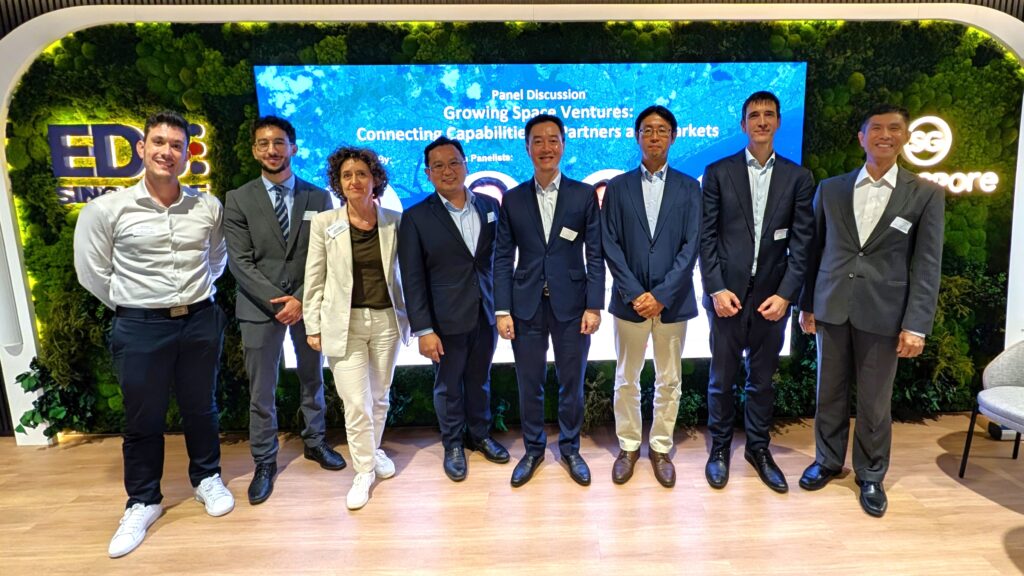
Moderated by Tok Wei Sin, Senior Advisor at Starburst, the discussion featured
- Koh Jin Hoe, Executive Director and Head of Capital Markets, Global Sales and Origination at SGX;
- Yo Shimizu, General Manager at SKY Perfect JSAT; and
- Gyorgy Lajtai, Co-founder and Board Director of Infinite Orbits.
The panellists noted that the customer base for space companies is expanding beyond traditional satellite operators and broadcasters. Demand is emerging across data analytics, disaster prevention and recovery, defence and national security, government services, and utilities and infrastructure. For companies entering these markets, having differentiated technology is important, but so is demonstrating a clear understanding of customer needs and how their solutions address them.
Building credibility is another important consideration, particularly for startups developing complex and capital-intensive technologies. Ground testing, environmental simulations and technology validation require substantial investment before deployment. Securing early milestones, including participation in recognised space programmes and technology challenges, can help companies demonstrate their capabilities and build confidence among prospective customers and partners.
The discussion also brought the funding and investment perspective into focus. Koh shared what investors look for when assessing space and technology companies: a clear technology advantage, proven customer traction, a credible revenue pipeline and a business model that can scale. Companies seeking capital need to articulate not only what their technology can do, but also how it meets market demand and can translate into sustainable commercial returns.
He also outlined the listing pathways available through SGX, including the Catalist board for growth companies and the Global Listing Board developed in partnership with Nasdaq for eligible larger companies. Government support, through research and development funding, ecosystem programmes and listing assistance, can also play a part in helping companies progress.
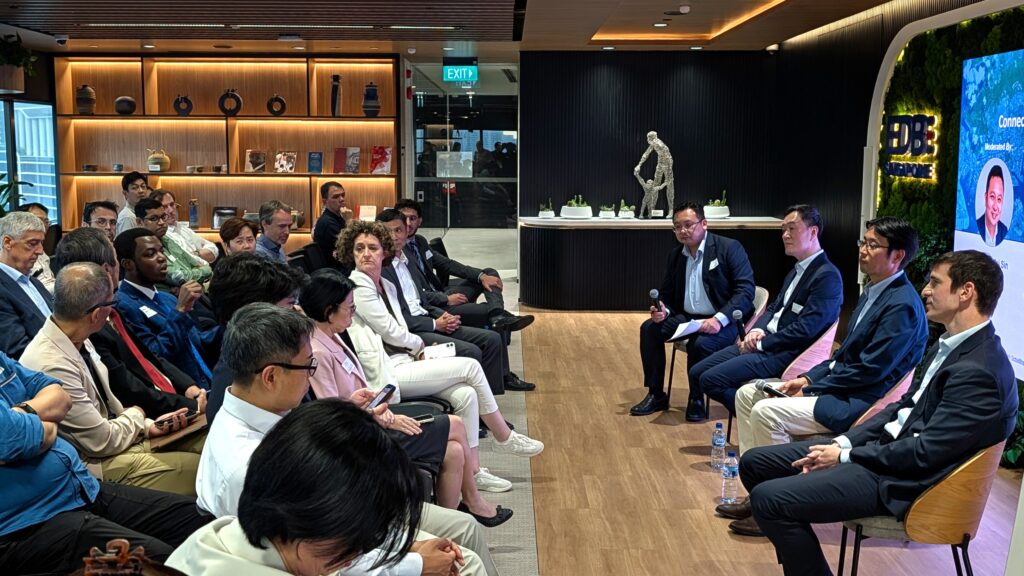
A key consideration for space ventures is to approach funding and investment as part of a longer-term business strategy. Aligning technology development and commercial plans with relevant government initiatives, while building partnerships and a track record of customer demand, can help strengthen a company’s position as it seeks to grow.
Building Connections for the Next Phase of Growth
Together, the two panel discussions offered a view of the space sector from both the application and enterprise-development perspectives. Satellite technology is opening up opportunities across a growing range of industries, but realising that potential depends on connecting technology developers with end-users, customers, partners, investors and markets.
The networking tea reception provided a lively setting for participants to continue the conversations, exchange ideas and forge new connections, reflecting the collaborative and outward-looking spirit of the space ecosystem.
As Singapore’s space sector continues to develop, platforms that bring together different parts of the industry and connect local capabilities with international opportunities will be important. AAIS looks forward to continuing to facilitate these connections and support the growth of the aerospace and space community through initiatives such as Space Summit 2027.
Recent Comments