
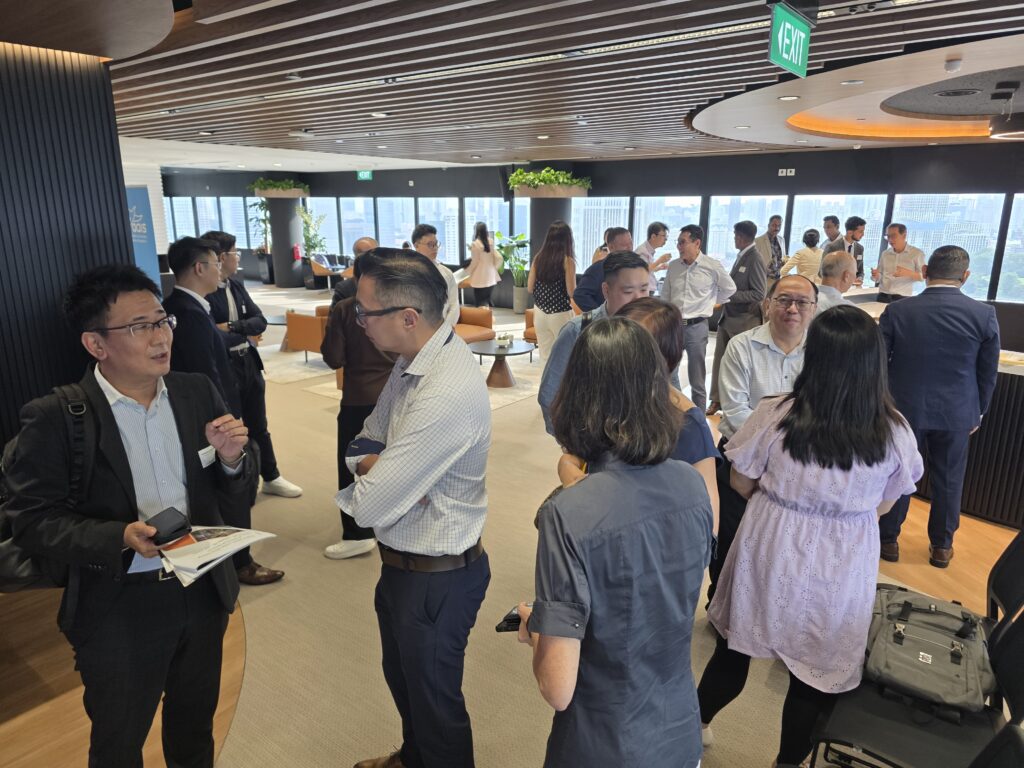
Against a backdrop of geopolitical tensions, evolving trade dynamics, tighter financing conditions and continued supply chain disruptions, AAIS convened industry leaders, finance professionals and government representatives for a timely seminar on Budget 2026, Trade, Financing & Risks: Insights for Aerospace Leaders.
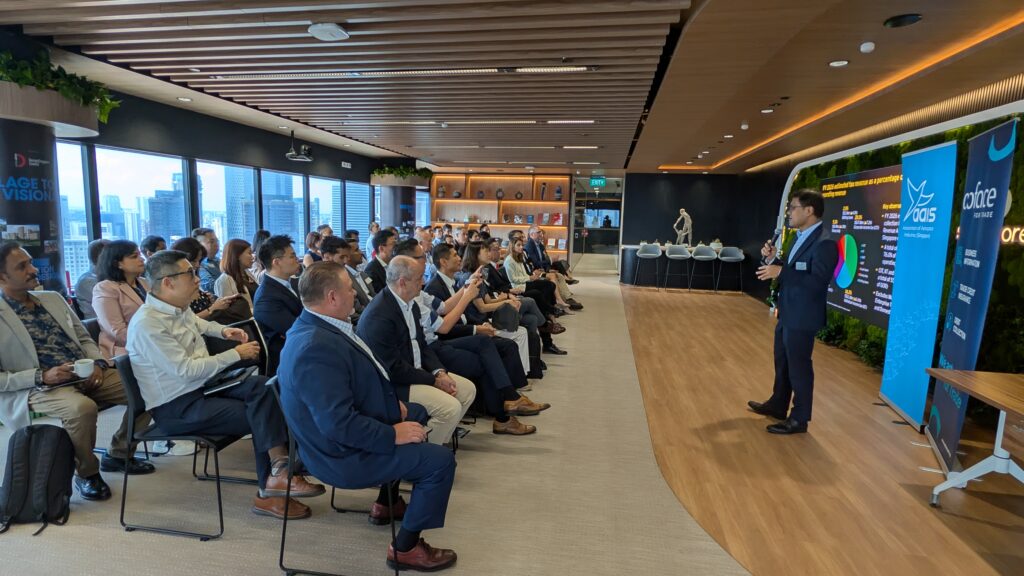
Held on 29 April at EDB and sponsored by Coface, the seminar opened with remarks from AAIS CE Mr Chew Hwee Yong. He noted that companies are operating in a climate where disruption is becoming increasingly persistent and structural. Industry dialogue and collaboration have become ever more important as companies navigate evolving challenges and reposition for resilience across operations and supply chains.
Budget 2026 and Strategic Business Considerations
Mr Johanes Candra, Partner, Business Incentives Advisory at EY, kicked off the discussions with an overview of Singapore Budget 2026 and key strategic considerations for aerospace companies. He outlined several measures relevant to aerospace businesses, including:
- The upcoming introduction of the Domestic Top-up Tax under the global minimum tax framework
- Increases to minimum qualifying salaries impacting Employment Pass eligibility
- Government support measures and incentives for AI adoption, innovation and enterprise transformation
- The mandatory phased rollout of the InvoiceNow e-invoicing network for GST-registered businesses through to April 2031
Highlighting that GST treatment within aerospace businesses is often highly complex due to the mix of warranties, repairs, manufacturing, services and product transactions involved, companies were encouraged to begin implementation planning early to ensure their systems are able to manage these complexities effectively.
Trade Tensions and Supply Chain Risks
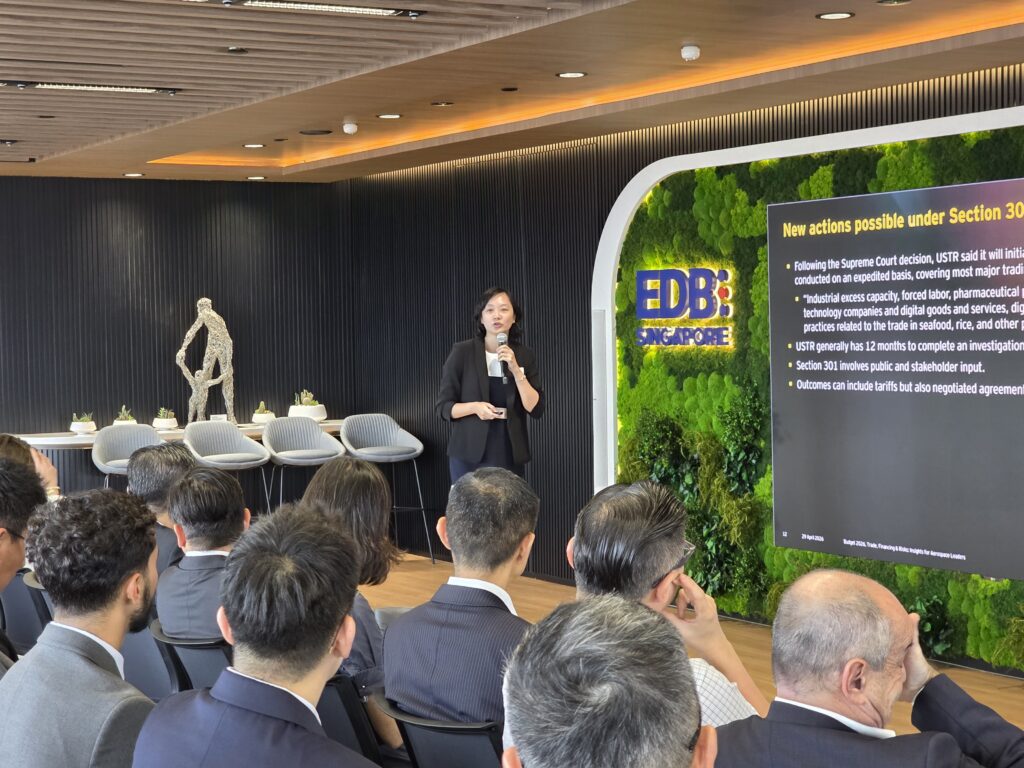
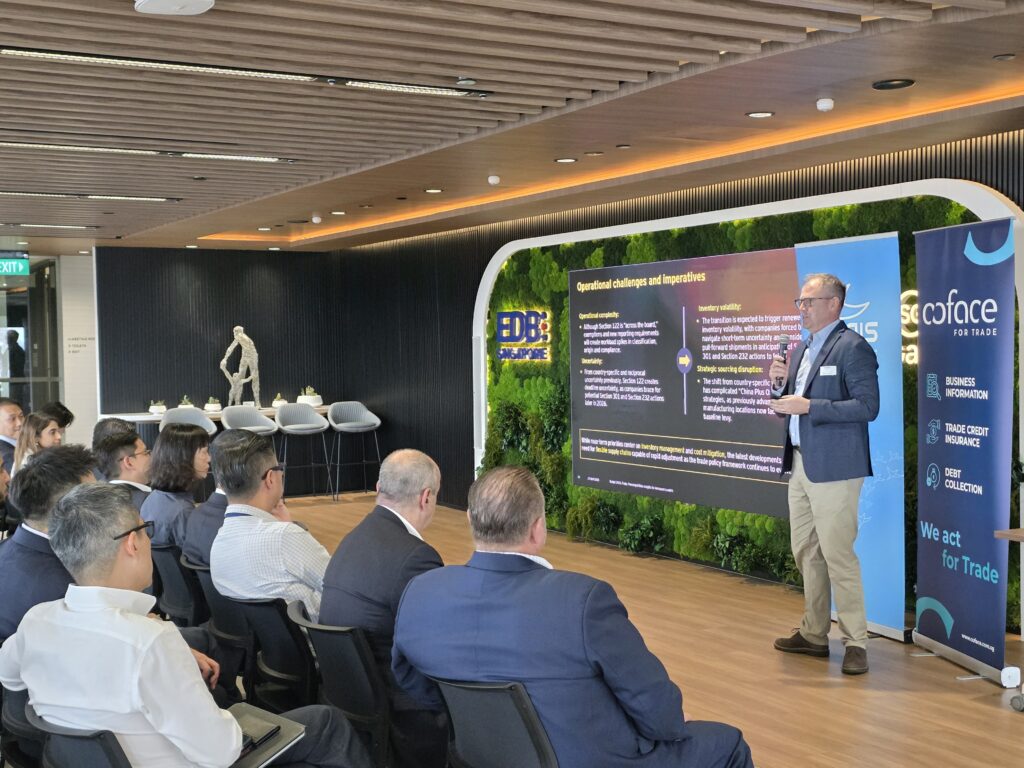
The subsequent segment on global trade developments was delivered by Ms Mok Sze Xin, Director, Tax ITTS, Global Trade and Customs Singapore at EY, and Mr Paul Griffiths, Partner, Operating Model Effectiveness at EY. Together, they unpacked the growing impact of geopolitical tensions, tariffs and trade controls on global manufacturing and aerospace supply chains.
Sze Xin spoke about the developments of U.S. trade and tariff measures, including the ongoing Section 232 and Section 301 investigations and their implications for the aerospace industry. Drawing parallels with earlier investigations affecting sectors such as semiconductors and pharmaceuticals, she noted that aerospace companies should prepare for some level of tariff exposure and continue monitoring developments closely as trade measures evolve. She also highlighted the importance of scenario planning, trade compliance and proactive risk management in navigating a prolonged period of uncertainty.
Building on this, Paul discussed the operational and financial implications for companies exposed to the US market. He noted that costs are expected to rise for businesses operating across affected supply chains and advised companies to move early to secure supply chain arrangements and build greater flexibility into sourcing strategies. He also highlighted emerging mechanisms such as the U.S. IEEPA, which is shifting toward granular, product-code level trade restrictions.
The presentation highlighted how supply chain transparency, oversight, integrated procurement strategies and stronger operational visibility are becoming increasingly critical for companies navigating a more fragmented global trade environment. Businesses were encouraged to adopt a more proactive approach towards scenario planning, supply chain mapping and trade risk management.
Aerospace Outlook and Singapore’s Positioning
Representing the Singapore Economic Development Board (EDB), Mr Zheng Jingxin (VP and Head, Mobility) shared broader perspectives on the global aerospace environment, supply chain shifts and Singapore’s long-term positioning as an aerospace hub.
Jingxin touched on the ongoing Middle East conflict and its impact on aviation, noting that while the situation remains serious, the aerospace industry is operating under very different conditions compared to the COVID-19 period. Fleet utilisation rates remain in the high 90% range, reflecting continued strong demand for air travel and aviation services despite geopolitical disruptions.
He also discussed ongoing aerospace supply chain and manufacturing challenges, including production bottlenecks and capacity constraints, while noting that these conditions are also creating sustained long-term demand for MRO services globally. On supply chain strategies, Jingxin highlighted how companies are increasingly responding by relocating geopolitically sensitive supply chains, adopting “China Plus One” strategies, and building competitive advantages through initiatives such as AI-enabled planning systems and improved operational visibility.
Jingxin also reaffirmed that aerospace remains a strategic sector for Singapore, supported by continued investments in infrastructure, connectivity, manufacturing capabilities and long-term talent development initiatives aimed at strengthening Singapore’s position as a trusted and globally connected aerospace hub.
Managing Risk in a “Perma-Crisis” Environment
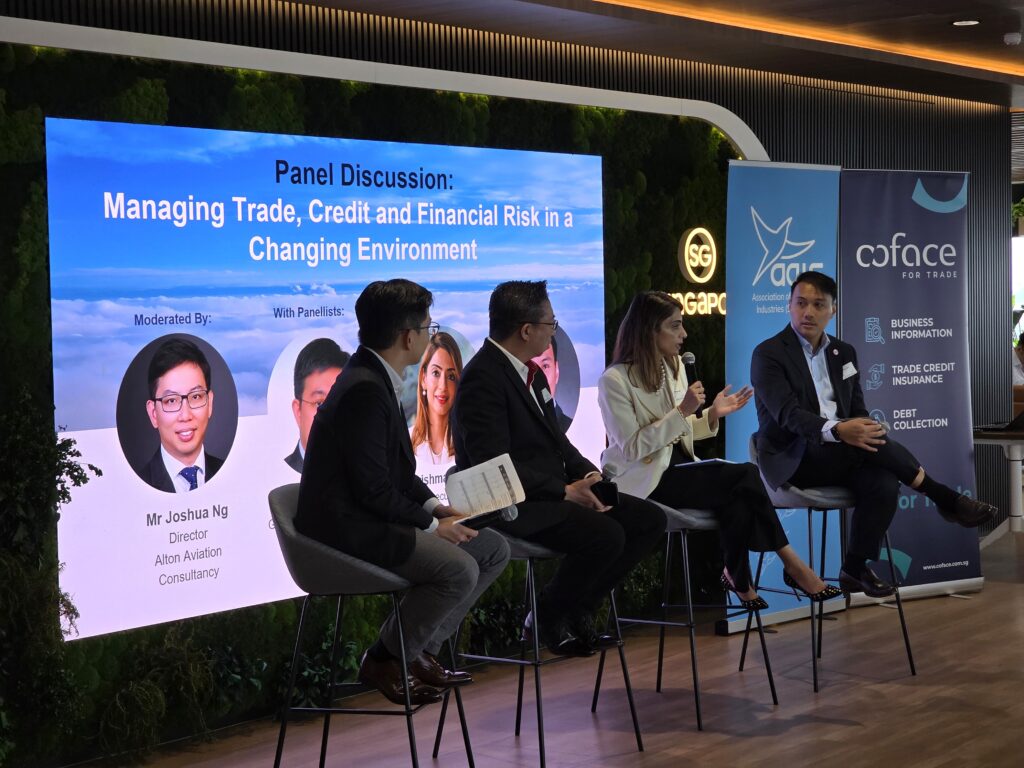
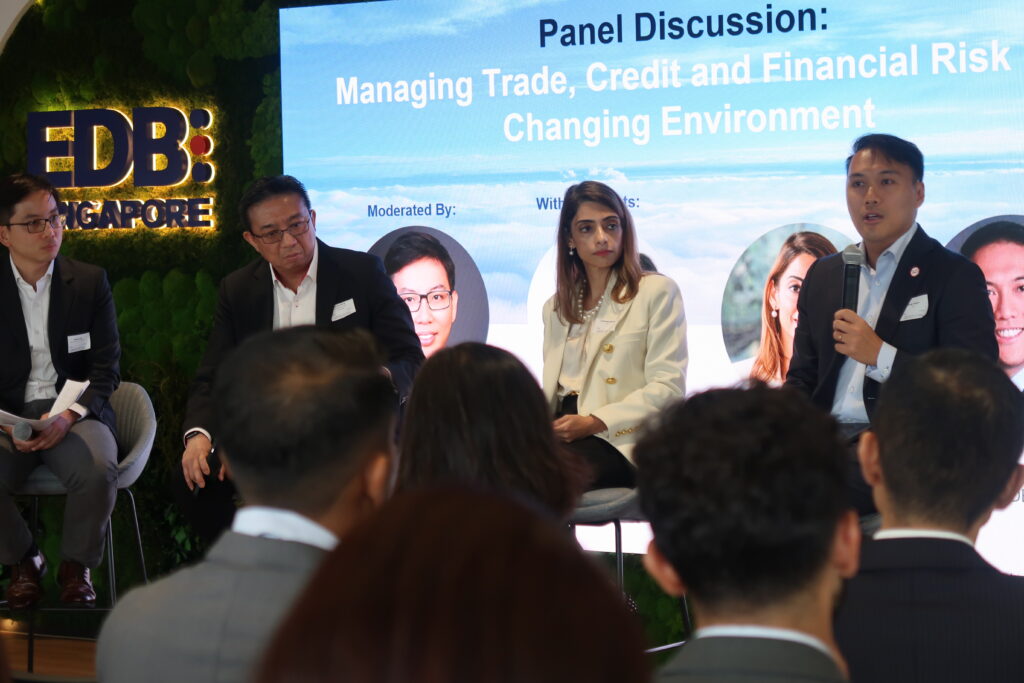
The seminar then moved into a panel discussion featuring panellists Ms Grishma Kewada, Chief Executive & Country Manager, Singapore at Coface; Mr Kelvin Chung, Group Managing Director of the Transfingo Group of Companies; and Mr Zheng Jingxin. Moderated by Mr Joshua Ng, Director at Alton Aviation Consultancy, the discussion explored practical perspectives on managing trade, financing and operational risks in an increasingly volatile business environment.
Several themes and takeaways emerged in the robust and incisive session:
- Trade tensions and geopolitical fragmentation are reshaping business decisions. Panellists discussed how tariff actions, trade restrictions and geopolitical developments have intensified over the past two years, increasing uncertainty for businesses globally. The discussion also touched on the importance of maintaining trust, credibility and resilience within increasingly fragmented global supply chains.
- Talent shortages remain a major challenge for the aerospace sector. Manpower shortages remain one of the aerospace sector’s most pressing concerns as demand for skilled workers accelerates across manufacturing, MRO and aviation operations.
- Risk management is becoming increasingly data-driven. Companies are increasingly seeking not only insurance solutions, but also stronger business intelligence, supply chain visibility and credit insights to support decision-making. The discussion highlighted the growing importance of proactive risk management amid rising payment delays and tightening cashflow conditions.
- Aerospace supply chains are undergoing structural shifts. Even as customer expectations and business models are evolving rapidly, enterprises also face the challenge of managing differing expectations and needs amid geopolitical fragmentation, especially companies operating between Western and Chinese ecosystems.
- AI is emerging as both an opportunity and a disruption. The panel explored how AI is increasingly being adopted across financial processes, business intelligence and operational optimisation. AI was described as a foundational platform technology with significant long-term implications for business transformation, and the panel noted the importance of managing workforce adaptation and organisational change alongside technological adoption.
Workforce Transformation and Skills Development
The seminar concluded with a presentation by Ms Marlia Mohamed Isnin from Workforce Singapore (WSG), who shared updates on workforce initiatives and support schemes relevant to aerospace companies. These included the SkillsFuture Workforce Development Grant (WDG) and Career Conversion Programme (CCP), which support workforce transformation, job redesign and skills development efforts. Marlia emphasised that workforce transformation should not be viewed purely as an HR exercise, but as a strategic business priority closely tied to long-term competitiveness and resilience.
AAIS thanks all speakers, panellists and participants for contributing to a highly insightful and timely discussion. AAIS also thanks participants for contributing to a live industry pulse survey capturing sentiments on current business challenges and support priorities. The findings will contribute towards our ongoing industry engagement efforts and future discussions with relevant government agencies.
Recent Comments