
From ICAO’s 2006 mandate to today’s increasingly data-driven frameworks, Safety Management Systems (SMS) have evolved into a core pillar of aviation oversight—anchored in proactive risk management, compliance, and organisational accountability. As the ecosystem continues to mature, SMS is also expanding in scope, with emerging considerations such as digitalisation, sustainability, and next-generation operations shaping future requirements.
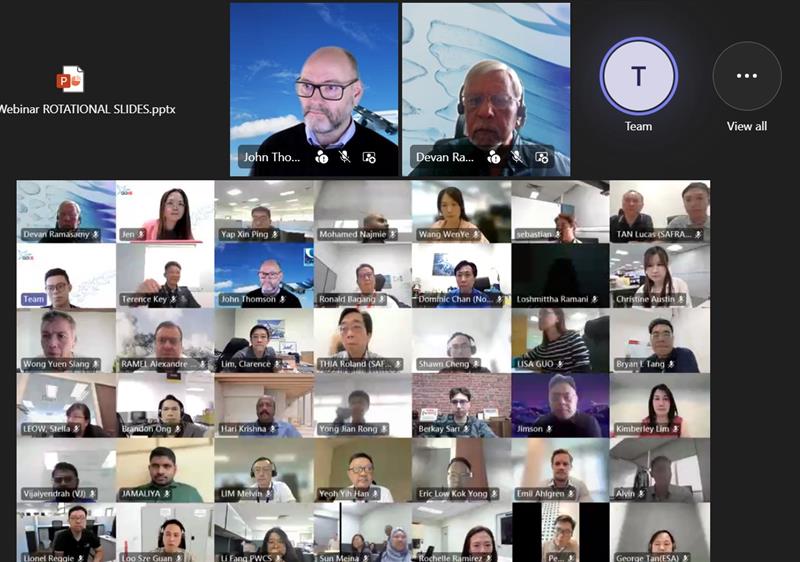
To explore how SMS can be effectively implemented, embedded within operational processes, and strengthened through organisational culture, the Association of Aerospace Industries (Singapore) (AAIS) organised a webinar on “Implementation Strategies for ICAO Annex 19 and Safety Management Systems” on 25 March 2026. The session brought together more than 90 participants from across the region.
The webinar featured two distinguished experts from CAA International (CAAi): Mr John Thomson, Senior Technical Advisor in Safety Management, and Mr Devan Ramasamy, who brings over 50 years of experience in airworthiness and maintenance regulation. Together, they provided both regulatory insight and practical perspectives on maturing Safety Management Systems in today’s operational environment.
Mr John Thomson, who serves on the ICAO Safety Management Panel, provided an update on Annex 19 Amendment 2 (Edition 3). He noted that while the regulatory changes are targeted, there is a notable emphasis on strengthening the human element within SMS, alongside a greater focus on State Safety Programmes.
He also highlighted several key industry resources in development:
- Safety Management Manual (SMM): Currently undergoing final ICAO review, with a new version expected to be published online in the coming months
- Safety Intelligence Manual: Designed as a scalable framework for data-driven safety decision-making, applicable across organisations regardless of technological maturity
- SMICG resources via Skybrary: Developed by ICAO subject matter experts, these materials provide practical and timely guidance on SMS maturity and human factors
A key theme from the presentation was the expansion of Just Culture beyond traditional operational roles. Drawing on his experience leading the UK State Safety Programme, Mr Thomson emphasised the importance of extending Just Culture awareness to support functions such as HR, Finance, and IT. He illustrated this through a practical example, where a non-operational error—such as a payroll issue—can indirectly affect operational performance by impacting frontline focus. This reinforces the need for a system-wide understanding of safety influence across the organisation.
The session also addressed emerging regulatory considerations, including EASA Part IS (Information Security), during an interactive Q&A. Speakers highlighted that information security within SMS extends beyond cyber protection to include safeguarding the integrity and anonymity of safety reporting systems. Maintaining trust in reporting channels was underscored as fundamental to sustaining a strong and effective safety culture.
The webinar concluded with an exchange of views on the evolving intersection between safety, regulation, and organisational behaviour in an increasingly digital aviation environment.
AAIS extends its sincere appreciation to Mr John Thomson, Mr Devan Ramasamy, and CAA International for their valuable insights and to all participants for their active engagement in this important safety dialogue.
Recent Comments