
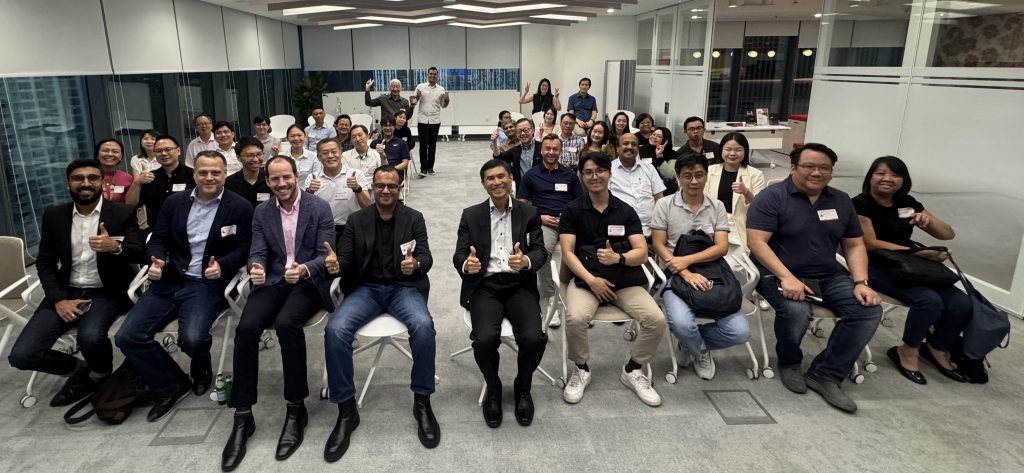
For its final event of 2025, AAIS co-organised a seminar on “Securing the Skies Ahead: Navigating the New Era of Aviation Cybersecurity” with CyberSafe on 12 December 2025. Hosted at the premises of CrowdStrike, the session brought together more than 50 participants from across the aviation ecosystem, including quality, compliance and IT professionals from aerospace, defence, UAS organisations and supporting industries.
The seminar opened with welcoming remarks by AAIS Chief Executive Chew Hwee Yong, who underscored the growing importance of cybersecurity as aviation systems become increasingly digitalised. He highlighted the need for closer collaboration across industry stakeholders, particularly as regulatory expectations continue to evolve alongside technological advancement.
The kick off presentation on “How Aviation Firms Can Stay Ahead of Emerging Cyber Threats,” was delivered by Dave Gurbani from CyberSafe. Drawing on real-world client experiences, Dave shared insights into the evolving aviation cybersecurity landscape, emerging threat vectors, and key regulatory trends shaping global cybersecurity expectations for aviation organisations.
This was followed by a presentation by Veronica Tan from the Cyber Security Agency of Singapore on “Securing the Skies – Cybersecurity for Aviation.” From a government perspective, she outlined how organisations can leverage national policies and frameworks to strengthen their cybersecurity foundations, while aligning with broader regulatory and risk-management objectives.
Dr George Lincoln from CrowdStrike then presented “Under the Hood with CrowdStrike: Compliance That’s Capable.” He emphasised that effective cybersecurity rests on the combined strength of people, processes and technology. While modern platforms can automate controls such as system visibility, patch management and threat detection, these capabilities must be underpinned by trained personnel, sound governance and clear procedures. He also noted that international standards such as ISO 27001 are designed to be practical and achievable for organisations of different sizes when implemented pragmatically.
The seminar concluded with a panel discussion on “Certification Overload: Simplifying Aviation Cyber Standards for a Fragmented Global Industry” moderated by Baljit Singh from Guardian Independent Certification Group, featuring all speakers from the session and Mathieu Goarant from SKOR.
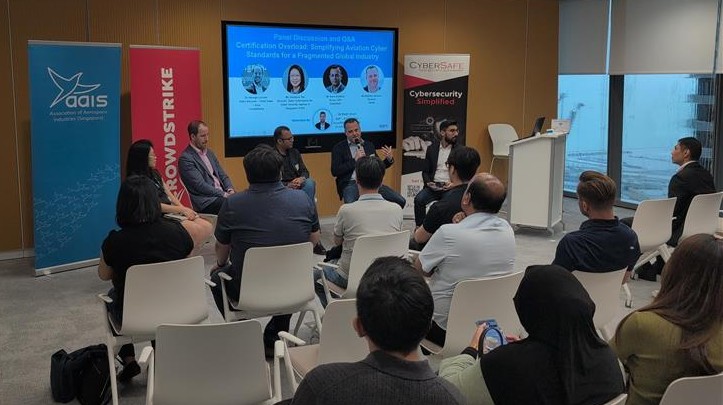
The core of the discussions was on how aviation’s strong safety record, supported by robust regulation, is now facing increasing complexity from overlapping international standards and sector-specific cybersecurity requirements.
The panel observed that treating each certification as a standalone exercise often leads to duplicated effort and inefficiencies. Instead, organisations were encouraged to adopt a unified, organisation-wide approach to cybersecurity, aligned with business objectives and enterprise governance. By building on common foundations across standards such as ISO 27001 and national frameworks, organisations can establish a core set of controls that can be mapped across multiple requirements. Panellists also discussed common challenges, including limited cybersecurity expertise, cost considerations and internal resistance to change, highlighting the importance of leadership commitment, internal communication and ongoing training for sustainable implementation.
In closing, panellists emphasised the need to focus less on accumulating certifications and more on achieving meaningful, risk-based cybersecurity outcomes. Practical takeaways included starting with a baseline assessment, aligning cybersecurity initiatives with existing SMS and QMS frameworks, investing in awareness and training, and staying abreast of regulatory developments.
AAIS extends its sincere appreciation to our partners, speakers, panellists and moderator for their valuable contributions and insights, and to all participants for their active engagement in making this a timely and impactful discussion to close out the year.
Recent Comments